Acne-prone skin often needs a thoughtful skincare routine rather than a long list of products. Excess oil, clogged pores, environmental exposure, stress, hormonal changes, and unsuitable skincare products can all contribute to breakouts or make existing skin concerns more noticeable. For people who prefer plant-based and traditional approaches, herbal skincare for acne can be an appealing option. However, choosing a herbal product simply because it says “natural” is not enough. The ingredients, formulation, skin type, frequency of use, and overall routine all matter. A good skincare routine should be gentle, consistent, and realistic, with products selected according to the needs of acne-prone skin.
When looking for the Best Herbal Skincare for Acne, it is important to focus on formulation quality and skin compatibility rather than promises of instant results. An Acne Face Pack can be included as an occasional treatment, while a gentle cleanser, suitable moisturizer, and carefully selected serum can form the foundation of a daily routine. Somara Ayurveda brings an Ayurvedic-inspired approach to skincare, offering products such as its Manjisthadi Anti-Acne Face Pack, Pure Ritual Face Wash, Manjisthadi Face Serum, Kumkumadi Face Serum, Kumkumadi Brightening Face Pack, Aloe Vera & Saffron Gel Cream, and other botanical-focused formulations. These products can be considered as part of a broader, balanced skincare routine rather than as quick fixes for individual breakouts.
What Is Herbal Skincare for Acne?
Herbal skincare for acne refers to skincare products that incorporate botanical ingredients traditionally used in beauty and wellness practices or selected for their skin-supporting properties. Depending on the formulation, these products may contain plant extracts, herbs, botanical oils, soothing ingredients, or other naturally derived components.
The word “herbal” does not automatically mean that a product is suitable for every acne-prone person. Acne-prone skin can also be sensitive, dry, oily, or combination. An ingredient that works well for one person may cause irritation for another.
This is why product selection should begin with understanding your skin rather than choosing a product based solely on marketing claims.
Why Does Acne-Prone Skin Need Special Care?
Acne-prone skin can be more reactive to aggressive cleansing, excessive exfoliation, heavy products, and frequent changes in routine.
Many people make the mistake of trying to remove every trace of oil from the skin. While controlling excess oil can be useful, over-cleansing may leave the skin feeling tight and uncomfortable.
A balanced routine should focus on keeping the skin clean without excessive stripping, supporting the skin barrier, and avoiding unnecessary irritation.
This is particularly important when introducing herbal or Ayurvedic products because “natural” ingredients can still be active and may not suit everyone.
How to Choose Herbal Skincare for Acne-Prone Skin
The first step is to understand what you want the product to do.
Are you looking for a cleanser for everyday use? A face serum? A face pack for occasional use? A moisturizer for hydration? Or a product designed to support the appearance of uneven or blemish-prone skin?
Once the purpose is clear, examine the ingredients and formulation.
Instead of selecting a product because it contains a large number of herbs, consider whether the formulation is appropriate for your skin type and intended use.
For acne-prone skin, simplicity and consistency can often be more useful than constantly adding new products.
Look for Skin-Supportive Herbal Ingredients
Many traditional botanical ingredients are used in Ayurvedic and herbal skincare formulations.
Neem, turmeric, aloe vera, manjistha, rose, saffron, and other botanicals have long been associated with traditional skincare practices. Modern products may combine these ingredients with other cosmetic ingredients to create a finished formulation.
However, traditional use should not be interpreted as a guarantee that an ingredient will treat acne.
The quality of the formulation, concentration, extraction method, compatibility with your skin, and frequency of application all influence the experience.
Manjistha and Acne-Prone Skincare
Manjistha is a traditional Ayurvedic botanical commonly used in skincare formulations.
It is often associated with traditional approaches to maintaining healthy-looking skin and supporting a balanced complexion.
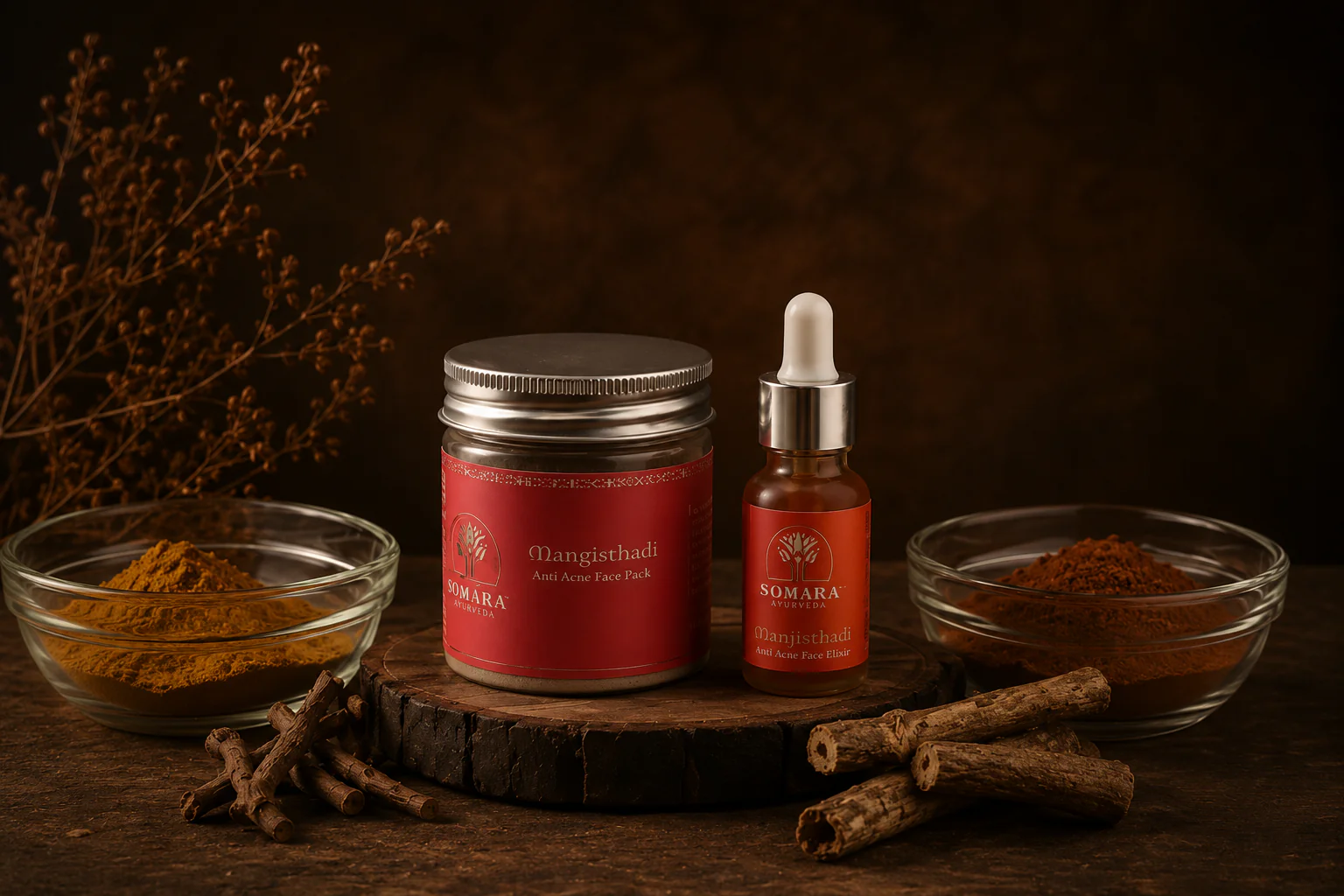
Somara Ayurveda incorporates manjistha into its Manjisthadi Anti-Acne Face Pack and Manjisthadi Face Serum, giving customers options for incorporating a manjistha-focused approach into their skincare routine.
When introducing such products, it is sensible to start gradually and observe how your skin responds.
Neem in Herbal Skincare
Neem is another well-known botanical ingredient used traditionally in Indian wellness and skincare practices.
It is commonly included in formulations designed for oily and blemish-prone skin.
The important point is that neem-based skincare should still be evaluated as a complete formulation. Concentrated or improperly used botanical ingredients may not be suitable for everyone.
A professionally formulated skincare product is generally preferable to experimenting with concentrated raw ingredients directly on the face.
Aloe Vera for Skin Comfort
Aloe vera is widely used in skincare because of its lightweight and soothing-feeling properties.
People with acne-prone skin sometimes prefer lightweight hydration because heavy or unsuitable products can feel uncomfortable on oily skin.
Somara Ayurveda’s Aloe Vera & Saffron Gel Cream provides a gel-cream format that can be considered when hydration is needed without choosing an especially heavy-feeling product.
Hydration remains important even when the skin is oily.
Rose in Herbal Skincare
Rose is traditionally associated with gentle, refreshing skincare routines and is frequently used in botanical beauty products.
Rose-based products can complement a broader skincare routine, particularly when the goal is to support a comfortable and fresh-looking complexion.
Somara Ayurveda offers Rose Mist and Rose Lip Butter as part of its botanical-focused range, although these products serve different purposes and should not be considered acne treatments.
This distinction is important when choosing skincare products: each product should be used for its intended purpose.
Why an Acne Face Pack Can Be Useful
An Acne Face Pack can be an occasional addition to a skincare routine.
Unlike a cleanser, which is generally designed for regular cleansing, a face pack is typically used for a shorter period and then removed.
The purpose can vary depending on the formulation. Some face packs are designed to support the appearance of clearer-looking skin, absorb excess oil, refresh the complexion, or provide a botanical skincare experience.
Somara Ayurveda’s Manjisthadi Anti-Acne Face Pack is specifically positioned within its skincare range for acne-prone skin.
It can be incorporated according to the product’s directions and the individual’s skin tolerance.
How Often Should You Use an Acne Face Pack?
More is not necessarily better.
Using a face pack too frequently can make some skin types feel dry or irritated, particularly when combined with exfoliating products or other active skincare ingredients.
The appropriate frequency depends on the specific formulation and your skin’s response.
Always follow the manufacturer’s directions rather than assuming that daily use will provide faster results.
A skincare routine should give the skin enough time to adapt.
Choosing Acne Skincare Products for Oily Skin
Oily skin can produce more sebum, which may contribute to a greasy appearance and can be associated with clogged pores for some individuals.
However, oily skin still requires hydration.
A routine can include a gentle cleanser, lightweight moisturizer, and appropriately selected treatment products.
Somara Ayurveda’s Pure Ritual Face Wash can be considered as part of a cleansing routine, while the Aloe Vera & Saffron Gel Cream can provide a lightweight-feeling moisturizing option.
The ideal combination depends on individual skin needs and product compatibility.
Choosing Products for Combination Skin
Combination skin can be more complicated because some areas may become oily while others feel dry.
Using the same approach across the entire face may not always be necessary.
For example, an individual may prefer a lighter product on oilier areas while focusing more on hydration where the skin feels dry.
A gentle routine is generally easier to maintain than using multiple specialized products at once.
Acne-Prone and Sensitive Skin
Acne-prone skin can also be sensitive.
If your skin frequently becomes red, itchy, burning, or uncomfortable after using skincare products, introducing several new products at the same time can make it difficult to identify the cause.
Patch testing a new product according to appropriate cosmetic guidance can be a useful precaution.
If irritation develops, discontinue the product and seek professional advice when necessary.
Don’t Confuse “Natural” With “Risk-Free”
One of the most important things to understand about herbal skincare is that natural ingredients are not automatically risk-free.
Plant extracts and essential oils can cause irritation or allergic reactions in susceptible individuals.
This is why professionally formulated products, clear ingredient information, appropriate usage instructions, and responsible product claims matter.
The goal of Best Herbal Skincare for Acne should be thoughtful formulation and skin compatibility-not simply the highest number of botanical ingredients.
Why Ingredient Transparency Matters
Consumers should be able to understand what they are applying to their skin.
A reliable skincare brand should provide ingredient information, product directions, usage recommendations, and relevant precautions.
Ingredient transparency also makes it easier for customers to avoid ingredients they already know their skin does not tolerate.
For people with recurring skin problems, transparency is particularly important because they may already be using dermatologist-recommended products.
Build a Simple Skincare Routine
A complicated routine is not automatically a better routine.
For many people, a basic routine can include cleansing, moisturizing, and daytime sun protection, with additional products introduced according to individual needs.
An acne-focused face pack or serum can be added carefully rather than introducing multiple products simultaneously.
This makes it easier to understand how your skin responds.
A Simple Routine Can Include:
- Morning: Gentle cleansing, suitable moisturizer, and broad-spectrum sunscreen.
- Evening: Cleansing, selected serum if appropriate, and moisturizer.
- Occasional: A suitable acne face pack according to product directions.
The exact routine should be adapted to skin type, existing skincare products, and individual tolerance.
The Role of Face Serum in Acne-Prone Skincare
Serums are concentrated cosmetic formulations designed for specific skincare goals.
A serum may focus on hydration, brightening, skin comfort, or the appearance of blemishes depending on its ingredients.
Somara Ayurveda’s Manjisthadi Face Serum can be considered for those interested in a botanical-focused serum as part of their routine.
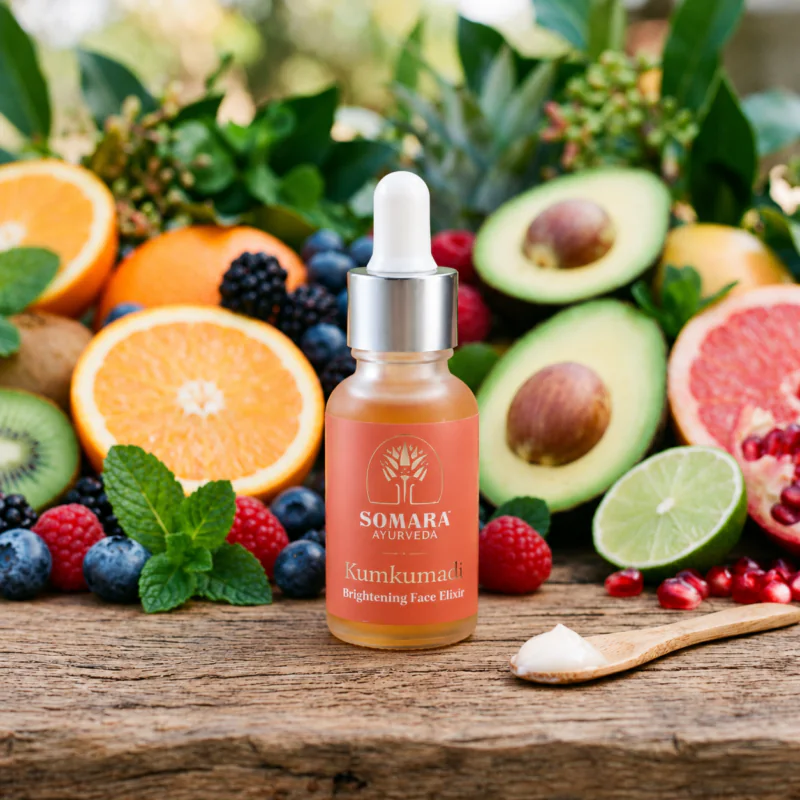
The Kumkumadi Face Serum is another product in the Somara Ayurveda range, traditionally inspired by Ayurvedic skincare practices and focused more broadly on complexion care.
These products should be selected according to the intended purpose rather than using every serum available in the range.
Brightening and Acne-Prone Skin
Acne-prone skin can sometimes appear uneven or dull, particularly when there are visible post-breakout marks.
This is where people may look for brightening skincare.
Somara Ayurveda offers a Kumkumadi Brightening Face Pack, which can be included in a broader complexion-focused routine.
However, brightening skincare should not be confused with acne treatment.
If the primary concern is persistent or severe acne, a skincare product should not replace professional medical evaluation.
Why Sunscreen Matters
Sun protection is an important part of a daytime skincare routine.
People dealing with blemishes or post-breakout marks may particularly benefit from consistent sun protection because UV exposure can affect the appearance of uneven pigmentation.
Choose a sunscreen that suits your skin type and does not make your routine unnecessarily uncomfortable.
If you are using an acne-focused skincare routine, introducing sunscreen is often more practical than continually adding additional treatment products.
Common Mistakes to Avoid
One common mistake is using too many acne products at the same time.
Another is scrubbing the skin aggressively in an attempt to remove oil or dead skin.
Some people also switch products every few days because they expect immediate changes.
These habits can make it difficult to determine what is helping or irritating the skin.
A more sensible approach is to introduce products gradually and follow their directions consistently.
Don’t Pick or Squeeze Breakouts
Picking at pimples can increase irritation and may contribute to marks or scarring.
It can be tempting to squeeze a visible breakout, especially before an event, but physical manipulation can make the area more inflamed.
A gentle skincare routine combined with professional guidance when needed is generally a better approach.
When Should You See a Dermatologist?
Herbal skincare can be part of a cosmetic skincare routine, but it should not be presented as a replacement for medical treatment.
If acne is persistent, painful, severe, rapidly worsening, or associated with significant scarring, professional medical evaluation is important.
A dermatologist can determine the type and severity of acne and recommend appropriate treatment.
People who are pregnant, taking medication, have known allergies, or have a diagnosed skin condition should also discuss suitable skincare choices with a qualified healthcare professional where appropriate.
How Somara Ayurveda Approaches Herbal Skincare
Somara Ayurveda brings an Ayurvedic-inspired perspective to modern skincare by combining traditional botanical concepts with products designed for everyday beauty routines.
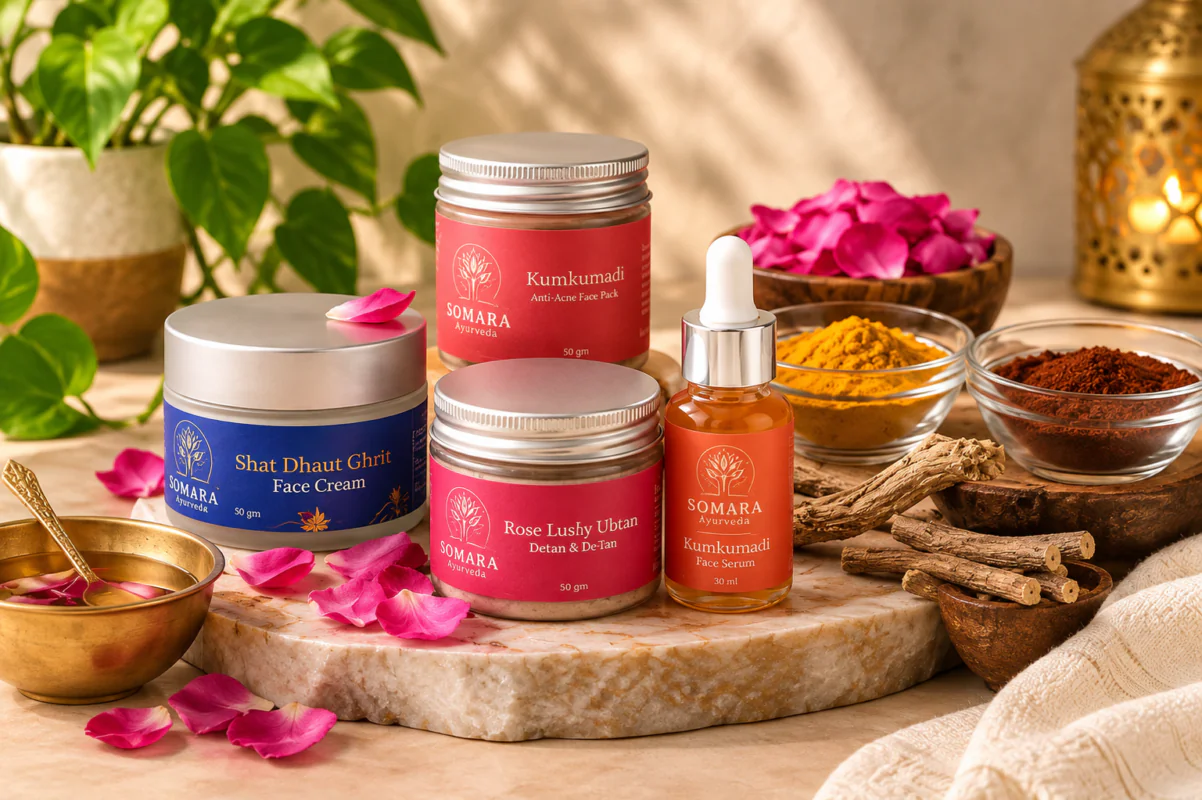
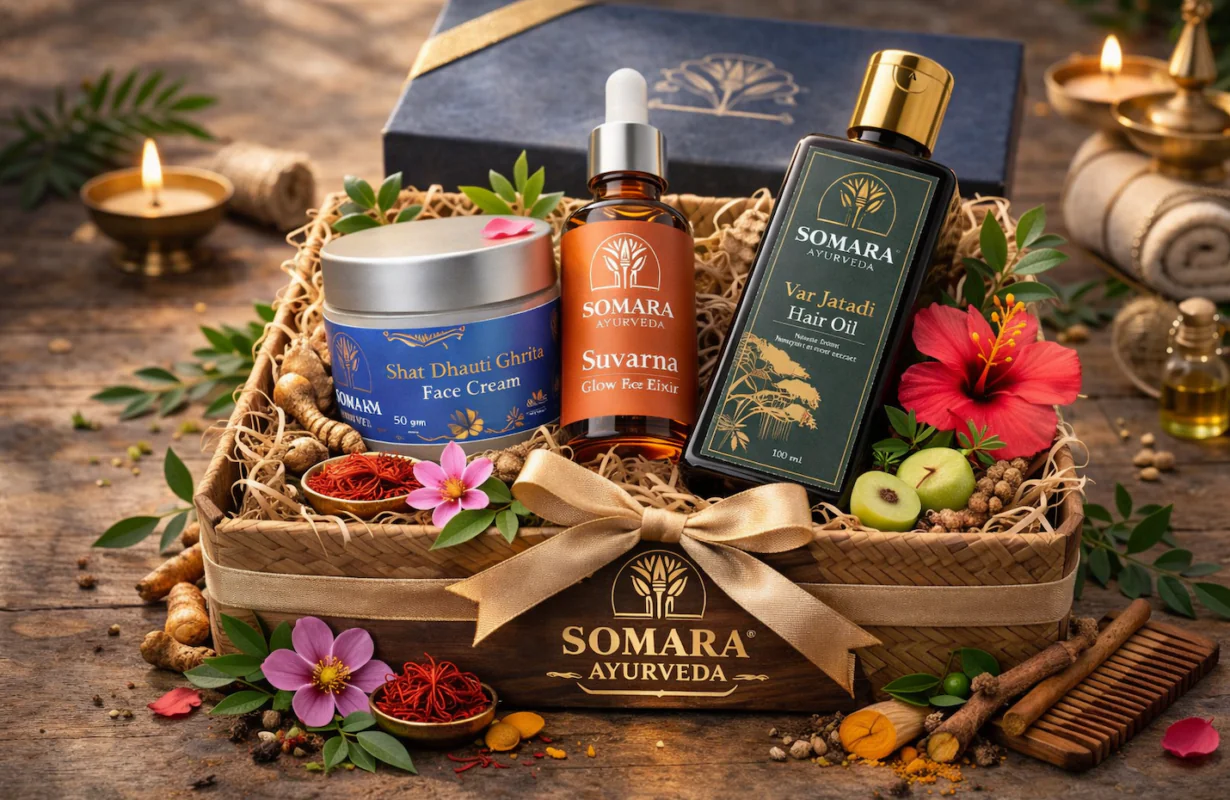
Its range includes products for different skincare needs, including the Manjisthadi Anti-Acne Face Pack, Manjisthadi Face Serum, Pure Ritual Face Wash, Kumkumadi Face Serum, Kumkumadi Brightening Face Pack, Aloe Vera & Saffron Gel Cream, Lodhradi Anti-Ageing Face Pack, Rose Body Ubtan, Manjisthadi Anti-Acne Face Pack, Rose Mist, and Rose Lip Butter.
For acne-prone skin, it is particularly important to choose products according to their intended use rather than assuming that the entire product range should be used together.
A thoughtful routine may include a cleanser, moisturizer, and selected targeted products, depending on individual skin needs.
How to Choose the Right Product From the Somara Ayurveda Range
If acne and blemish-prone skin are your main concerns, the Manjisthadi Anti-Acne Face Pack and Manjisthadi Face Serum may be the most relevant products to explore within the range.
For cleansing, the Pure Ritual Face Wash can form part of a daily routine.
For lightweight hydration, the Aloe Vera & Saffron Gel Cream can be considered based on skin preference.
If your primary goal is complexion care and brightening, the Kumkumadi Brightening Face Pack and Kumkumadi Face Serum offer different approaches.
The key is to avoid turning skincare into a checklist. Select products according to your actual needs.
Herbal Skincare for Acne: A Practical Approach
The best skincare routine is usually one that you can follow consistently.
Instead of buying multiple products because they are labeled herbal, begin with your primary concern.
If your skin is oily and blemish-prone, prioritize gentle cleansing and appropriate hydration.
If your skin is sensitive, introduce products slowly.
If you are mainly concerned about post-breakout unevenness, consider complexion-focused products while maintaining sun protection.
If acne is persistent or severe, seek professional advice instead of relying solely on cosmetic products.
This balanced approach allows herbal skincare to become part of a sensible routine rather than being treated as a guaranteed solution.
FAQs
Is herbal skincare good for acne-prone skin?
Herbal skincare can be suitable for some people with acne-prone skin, depending on the formulation and individual skin tolerance. Botanical ingredients such as manjistha, neem, aloe vera, and others are commonly used in traditional and modern skincare. However, “herbal” does not guarantee that a product will work for everyone.
Which herbal ingredients are commonly used for acne-prone skin?
Neem, manjistha, turmeric, aloe vera, and other botanical ingredients are commonly found in herbal skincare formulations. Their suitability depends on the complete formulation and individual skin sensitivity. Traditional use should not be treated as proof that an ingredient will medically treat acne.
How can I choose the Best Herbal Skincare for Acne?
Start by identifying your skin type and primary concern. Look for transparent ingredient information, suitable formulations, clear usage directions, and products designed for your intended purpose. Introduce new products gradually and discontinue use if irritation occurs.
Can I use an Acne Face Pack every day?
Not necessarily. The appropriate frequency depends on the specific product and your skin’s tolerance. Follow the manufacturer’s directions and avoid excessive use, especially if your routine already contains exfoliating or active products.
Can herbal skincare replace acne treatment from a dermatologist?
Cosmetic herbal skincare should not automatically be considered a replacement for medical acne treatment. Persistent, painful, severe, or scarring acne may require professional evaluation and treatment from a qualified dermatologist.
Is natural skincare always safe for sensitive skin?
No. Natural and botanical ingredients can still cause irritation or allergic reactions in some people. Sensitive skin requires careful product selection and gradual introduction of new products.
Final Thoughts
Choosing the right herbal skincare for acne is less about finding a single miracle product and more about building a consistent routine around your skin’s individual needs. Look beyond labels and consider ingredients, formulation, intended use, skin type, product directions, and your own tolerance. A well-designed Acne Face Pack can be an occasional addition, while a gentle cleanser, appropriate moisturizer, and selected serum can support a more complete routine.
For consumers exploring the Best Herbal Skincare for Acne, Somara Ayurveda offers an Ayurvedic-inspired range that includes targeted products such as the Manjisthadi Anti-Acne Face Pack and Manjisthadi Face Serum, alongside everyday skincare options such as Pure Ritual Face Wash and Aloe Vera & Saffron Gel Cream. Other products, including the Kumkumadi Face Serum and Kumkumadi Brightening Face Pack, can address different complexion-focused skincare preferences.
Most importantly, skincare should be approached realistically. Herbal and Ayurvedic-inspired products can be part of a thoughtful cosmetic routine, but persistent or severe acne deserves professional attention. By choosing products carefully, introducing them gradually, protecting the skin from excessive irritation, and maintaining a consistent routine, you can create a more informed approach to caring for acne-prone skin.
Somara Ayurveda combines traditional Ayurvedic inspiration with modern skincare formats, giving consumers different options for creating a personalized routine. The right product is not necessarily the one with the longest ingredient list or the strongest promise-it is the one that fits your skin, your routine, and your actual skincare goals.