Choosing skincare products can feel overwhelming because the market offers thousands of cleansers, face creams, serums, masks, oils, and other beauty products. Every brand claims to offer something different, whether it is a particular ingredient, a traditional formulation, a modern active, or a complete skincare solution. However, choosing among the best skincare brands should not be based only on attractive packaging, influencer recommendations, or a product’s popularity. Your skin has its own needs, and the right skincare product should be selected based on ingredients, formulation, skin type, product purpose, transparency, and how well it fits into your everyday routine.
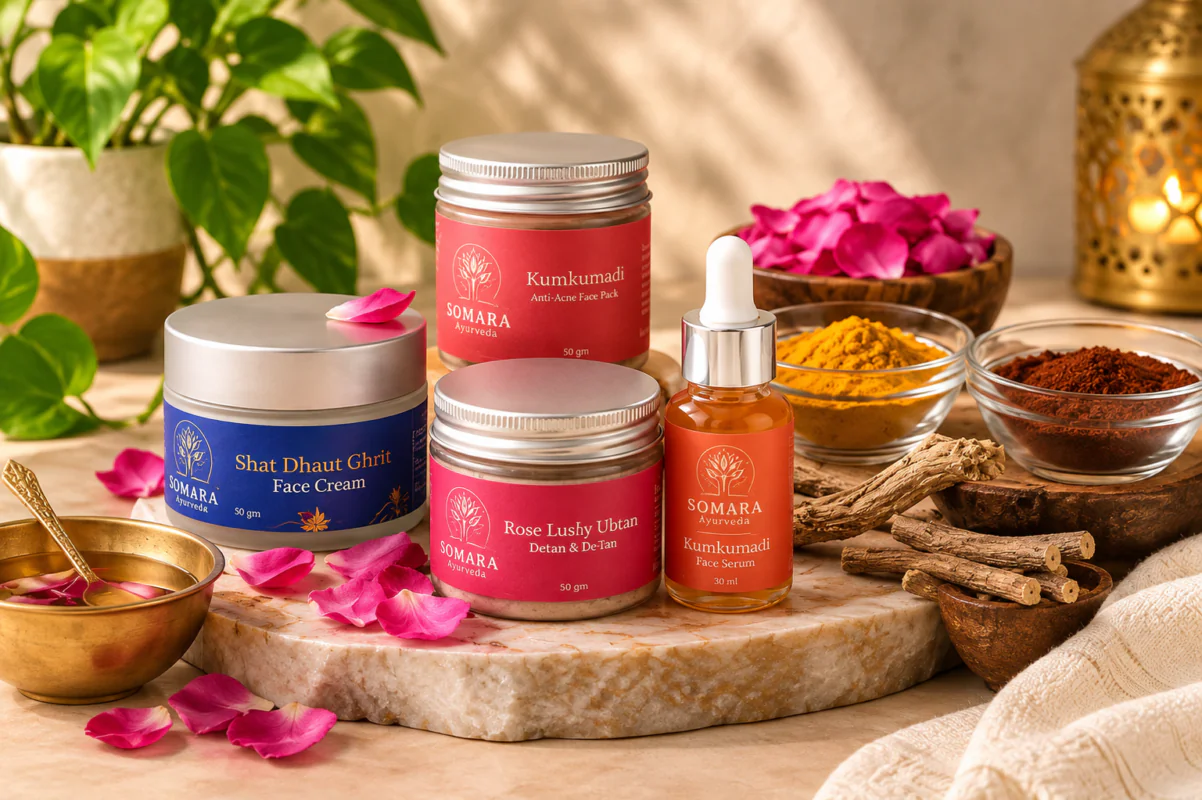
The growing interest in ingredient-conscious and traditional skincare has also encouraged consumers to look beyond conventional beauty products. Ayurvedic skincare, in particular, focuses on traditional knowledge and carefully selected botanical ingredients while encouraging a more holistic approach to skin care. Somara Ayurveda brings this approach into modern skincare by offering products inspired by Ayurvedic principles and botanical care. Whether you are looking for best products face care, researching popular skincare brands, or comparing skin care best brands, understanding what makes a skincare product suitable for you is more useful than simply choosing the most talked-about name.
What Makes a Skincare Brand Worth Considering?
A skincare brand should be evaluated by more than its reputation or social media presence. A trustworthy brand should communicate clearly about its products, ingredients, intended use, and directions. Consumers should be able to understand what a product is designed to do and whether it is suitable for their skin type or concerns.
Ingredient transparency is particularly important. A product label should provide meaningful information about its formulation rather than relying entirely on broad claims such as “natural,” “herbal,” or “advanced.” Consumers should look at the actual ingredient list and understand the role of important ingredients whenever possible. A responsible skincare brand should also avoid making unrealistic promises about what a cosmetic product can achieve.
Another important factor is consistency. A brand that develops products with a clear philosophy and maintains consistent quality standards can be easier for consumers to trust over time. This does not mean every product from one brand will suit every person, but it gives consumers a stronger basis for making informed choices.
Understand Your Skin Type First
Before searching for the best skincare brands, understand what your skin actually needs. Skincare is highly individual, and a product that works well for one person may not be appropriate for another. Skin can generally be described as dry, oily, combination, normal, or sensitive, although individual skin characteristics can vary considerably.
Dry skin often benefits from products designed to support moisture and reduce the feeling of tightness. Oily skin may require lightweight formulations that fit comfortably into a routine without feeling excessively heavy. Combination skin can require a balanced approach because different areas of the face may have different needs. Sensitive skin may benefit from simpler routines and careful ingredient selection.
Seasonal changes, climate, age, lifestyle, and environmental exposure can also influence how skin behaves. Someone living in a hot and humid environment may have different skincare preferences from someone living in a cold and dry climate. Therefore, choosing face care products should begin with understanding your own skin rather than following a generic routine.
Check the Ingredients Before Buying
One of the most useful habits consumers can develop is reading the ingredient list before purchasing skincare. Marketing claims can make a product sound appealing, but the ingredient list provides more practical information about what the formulation contains.
When evaluating products, look at the key ingredients and understand their intended purpose. Botanical extracts, oils, butters, vitamins, humectants, emollients, and other cosmetic ingredients may serve different functions within a formulation. The concentration, formulation, combination of ingredients, and overall product design can all influence how a product performs.
Consumers should also remember that “natural” does not automatically mean suitable for every skin type. Botanical ingredients can be beneficial for some people but may cause irritation or sensitivity in others. This is why responsible skincare selection involves considering the complete formulation rather than choosing a product solely because it contains a natural ingredient.
Why Ingredient Transparency Matters
Ingredient transparency is one of the strongest indicators consumers can use when comparing popular skincare brands. A brand should make it reasonably easy for customers to understand what they are purchasing and how the product is intended to be used.
Transparent product information can include a complete ingredient list, directions for use, product purpose, quantity, storage information, and relevant precautions. Clear communication helps customers make decisions based on their own needs instead of relying entirely on advertising.
For Ayurvedic-inspired products, transparency is especially useful because consumers may encounter traditional ingredient names or botanical terminology that they are unfamiliar with. Brands that explain their formulations and usage instructions can make traditional skincare easier to understand for modern consumers.
Consider the Product’s Purpose
Another important consideration is whether the product actually fits your skincare routine. The best products face care category includes many different product types, and each one serves a different purpose. A cleanser is used to cleanse the skin, while a moisturizer helps support skin hydration. A face mask may be used periodically, while an oil or serum may be incorporated according to individual skincare preferences.
Buying multiple products without understanding how they work together can make a routine unnecessarily complicated. A simpler routine that you can follow consistently may be more practical than a large collection of products that are used irregularly.
Before buying, ask yourself what role the product will play. Is it intended for cleansing, moisturizing, nourishing, exfoliating, or another cosmetic purpose? Understanding this makes it easier to compare similar products and select something that actually contributes to your routine.
Look for a Brand With a Clear Skincare Philosophy
The skin care best brands are not necessarily those with the largest advertising budgets. A strong skincare brand usually has a clear product philosophy and communicates why its formulations exist.
Some brands focus on dermatology-inspired formulations, while others emphasize botanical ingredients, traditional practices, minimalist routines, or particular skincare categories. Consumers can decide which philosophy aligns with their personal preferences.
For people interested in Ayurvedic skincare, a brand’s approach to traditional ingredients and formulations is worth examining. Ayurveda has a long history of traditional wellness practices, but modern skincare products should still provide clear information about their intended cosmetic use. This balance between traditional inspiration and modern product transparency can make Ayurvedic skincare more accessible to today’s consumers.
Why Ayurvedic Skincare Is Gaining Attention
Ayurvedic skincare has attracted interest from consumers looking for botanical and tradition-inspired approaches to everyday personal care. Instead of focusing only on short-term cosmetic trends, Ayurvedic-inspired skincare often draws from traditional ingredients and practices that have been used across generations.
Consumers interested in this category should still evaluate individual products carefully. Traditional ingredients are not automatically appropriate for everyone, and individual skin tolerance varies. Patch testing a new cosmetic product can be a sensible precaution, particularly for people who know that their skin is sensitive.
Somara Ayurveda offers a way for consumers to explore Ayurvedic-inspired skincare as part of a practical personal care routine. The focus is on bringing traditional botanical concepts into products that fit modern everyday skincare habits.
Don’t Choose Products Only Because They Are Popular
Popularity can be a useful indicator that many people are interested in a brand, but it should not be the only reason to buy a product. A product can become popular because of social media trends, celebrity promotion, packaging, or temporary marketing campaigns.
When comparing popular skincare brands, consider whether the product is actually suitable for your skin and whether its formulation aligns with your preferences. Reviews can provide useful experiences from other consumers, but individual results can vary significantly.
Instead of asking only, “Is this product popular?” ask, “Is this product appropriate for my skin, my routine, and the purpose I need it for?” That question leads to a more informed purchasing decision.
Check Product Reviews Carefully
Customer reviews can help consumers understand practical aspects of a product, such as texture, scent, packaging, ease of use, and overall experience. However, reviews should be interpreted carefully.
Look for patterns across multiple reviews rather than relying on one extremely positive or negative comment. Pay attention to reviews from people who appear to have similar skin types and expectations. Also consider when the review was published and whether the reviewer is discussing the actual product rather than making a general comment about the brand.
Reviews are best used as one piece of information alongside ingredients, product instructions, brand transparency, and your own skincare requirements.
Consider the Brand’s Expertise and Credibility
E-E-A-T principles are particularly useful when evaluating health and beauty-related content. Consumers should look for brands that demonstrate knowledge about their products and communicate responsibly.
A credible skincare brand should avoid exaggerated claims and provide practical information about how products are intended to be used. It should also distinguish cosmetic benefits from medical treatment claims. Skincare products are not substitutes for professional medical care when someone has a persistent or significant skin condition.
Brand expertise can be demonstrated through clear product information, thoughtful formulation explanations, educational resources, transparent communication, and responsible customer guidance. These factors can help consumers distinguish an established skincare approach from purely trend-driven marketing.
Choose a Routine You Can Follow Consistently
Even the most carefully selected face care products will not be particularly useful if they are rarely used. Consistency is an important part of everyday skincare. A manageable routine is usually easier to maintain than an unnecessarily complicated one.
A basic routine may involve cleansing, moisturizing, and daytime sun protection, depending on individual needs and preferences. Additional products can be introduced when there is a clear reason for using them. This approach allows consumers to understand how their skin responds to individual products instead of changing multiple products at the same time.
When introducing a new skincare product, consider adding it gradually. This makes it easier to identify which product may be responsible if irritation or sensitivity occurs.
Think About Your Lifestyle and Environment
Skincare choices should fit your everyday life. Climate, work environment, outdoor exposure, travel, exercise, and daily habits can influence how your skin feels and what type of products you prefer.
For example, people living in warm climates may prefer lighter textures during the day, while those experiencing dry weather may prefer richer moisturizing products. Someone who travels frequently may prioritize simple, versatile products that are easy to carry and use consistently.
The best skincare routine is therefore not necessarily the most elaborate one. It is the routine that matches your skin, lifestyle, environment, and personal preferences.
What Should You Avoid When Buying Skincare?
Consumers should be cautious about products that rely heavily on exaggerated promises. Claims suggesting that a cosmetic product can provide guaranteed or instant results should be evaluated critically.
It is also wise to avoid purchasing products simply because they are trending. A viral product may be excellent for some people but completely unsuitable for others. Similarly, using too many active or exfoliating products simultaneously can make a routine unnecessarily complicated.
Another consideration is product storage and shelf life. Consumers should follow the manufacturer’s storage instructions and pay attention to product expiry or recommended usage periods after opening. Proper storage helps maintain the product’s intended condition.
Why Somara Ayurveda Can Be Part of Your Skincare Journey
Somara Ayurveda focuses on Ayurvedic-inspired skincare and botanical personal care, offering consumers an opportunity to incorporate traditional approaches into modern routines. The brand can be considered by customers who are interested in exploring Ayurveda-inspired face care products and building a skincare routine around thoughtfully selected formulations.
The most important part of any skincare journey is choosing products according to individual needs rather than simply following trends. Somara Ayurveda can be explored as part of this process, particularly by consumers interested in traditional botanical approaches to everyday skincare.
Whether you are comparing the best skincare brands, exploring popular skincare brands, or searching for best products face care, taking time to understand ingredients, product purpose, skin type, and brand transparency can help you make a more confident decision.
A Simple Checklist Before Buying Skincare
Before purchasing a new skincare product, consider a few practical questions. Does the product suit your skin type? Do you understand its intended purpose? Have you checked the ingredient list? Are the directions clear? Does the brand provide transparent product information? Does the product fit into your existing routine?
It is also worth considering whether you actually need the product. Skincare does not have to involve dozens of products. A focused routine with products selected for specific purposes can be easier to maintain and understand.
If you have a known skin sensitivity or a persistent skin concern, consider seeking advice from an appropriately qualified healthcare professional before introducing new products.
Final Thoughts
Finding the best skincare brands is not about choosing the brand with the most advertisements, followers, or viral products. The better approach is to evaluate products based on your skin type, ingredients, formulation, intended purpose, transparency, usability, and the credibility of the brand. This approach helps shift the focus from marketing claims to informed skincare decisions.
When comparing skin care best brands, remember that the right product is personal. What works for one individual may not produce the same experience for another. Start with your own needs, keep your routine practical, introduce new products thoughtfully, and pay attention to how your skin responds.
For consumers interested in Ayurvedic-inspired personal care, Somara Ayurveda provides an option for exploring traditional botanical approaches within a modern skincare routine. By combining informed product selection with consistency and realistic expectations, you can create a face care routine that is easier to understand and maintain over time.
FAQs
1. How do I choose the best skincare brands for my skin?
Start by identifying your skin type and the specific purpose you want the product to serve. Then review the ingredients, directions, brand transparency, product reviews, and formulation. The most suitable brand is the one whose products align with your individual skincare needs rather than simply being the most popular.
2. What should I check before buying face care products?
Check the ingredient list, product purpose, directions for use, suitability for your skin type, product quantity, storage instructions, and brand information. If you have sensitive skin, consider introducing new products gradually and patch testing when appropriate.
3. Are popular skincare brands always the best choice?
Not necessarily. Popularity indicates that a product has attracted attention, but it does not mean the product will suit every skin type. Ingredients, formulation, product purpose, personal preferences, and individual skin response are more important factors.
4. What makes a skincare brand trustworthy?
A trustworthy skincare brand generally provides clear product information, transparent ingredient lists, realistic claims, appropriate usage instructions, and consistent communication. Educational content and responsible guidance can also demonstrate a brand’s commitment to helping consumers make informed decisions.
5. Is Ayurvedic skincare suitable for everyone?
No single skincare approach is suitable for everyone. Ayurvedic-inspired products contain botanical ingredients that may work well for some people but may not suit others. Reviewing the formulation and following product directions is important, and people with persistent skin concerns should consult a qualified healthcare professional.